Too Bee or not too Bee
You are, I'm sure, well aware of my continuing personnel problems... to whit, no personnel.*1
The entire museum, a vast many-chambered edifice, is simply going to wrack and ruin without the necessary workforce to maintain its many important and rare exhibits and collections. Keeping the dust collections dusted is a full-time job in itself. The rest of the museum staff have simply stopped turning up to work... just because there's nothing to pay them. Young people these days are SO self-absorbed! You'd think that they'd realise that the sheer honour of being allowed to contribute to the furtheration of our crucial cultural mission is payment enough.
I, of course, do what I can, but I was employed to deal with the administrative side of operations which is, frankly, more than one person, no matter how committed and talented and hardworking they are, could possibly manage. My Sisyphean task is made no easier by our beloved Director's habit of sending back huge crates of important materials (both naturalia and artificalia) that she has picked up in the course of her investigatory peregrinations. The most recent was a shipping container of botanical specimens (mainly flowers) -- signally unaccompanied by any indication of what she wanted done with them.
I was more than happy, therefore, when first one, and then many, O. avoseta appeared at our doors. Musrum only knows where they came from.*2 As far as I'm aware, they didn't even exist until a year ago. It just proves that if you have faith, Providence WILL provide. I WAS a little surprised when I had to provide individual workplace contracts for the anti-social little brutes (you'd THINK that as bees they'd have a greater sense of solidarity with each other! What happened to the concept of the Hivemind, people???)!!! My concerns were calmed by their unquestioning acceptance of the contractual terms.* 3
First things first -- I got them to work on the botanical bonanza. Soon they were all as busy as... well, themselves. Leaving me to do what I do best.
I thought.
Following best practice due diligence, I returned to their work area some weeks later to discover that I had been played for a patsy. Not only had the little brutes scarpered, they had taken advantage of my generosity to dump me with their offspring -- all 12.5 million of them. Do I LOOK like a baby-bee-sitter??
AND, rather than catagorising and filing the botanical specimens, they had destroyed them to make individual nurseries for their children.
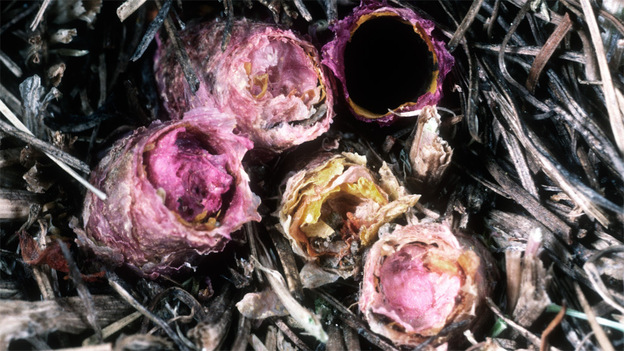
A squirt of mortein soon put paid to their irresponsible hopes for posterity (and gave me back my weekends and evenings)... but WHAT am I supposed to do with millions of individually-crafted, admittedly rather pretty, baby bowers?
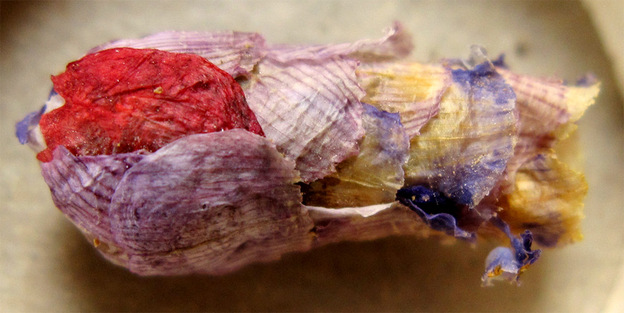
'Busy Bees Use Flower Petals For Nest Wallpaper' by Kathleen Masterson -->
*1 Saving that arachnid sociopath*3 Inky-Blinky who, I must add, only appears when all the hard work is done and then only to, in a contra-intuitive way (species-wise), white-ant whatever it is that I'm doing.
*2 Turkey actually.
*3 Yes, I KNOW that this is a tautology already!
Read more>>
posted by Administration at 3:25 pm
|
182 comments


